


What Do Pet Hedgehogs Eat? A Complete Diet Guide for African Pygmy Hedgehogs
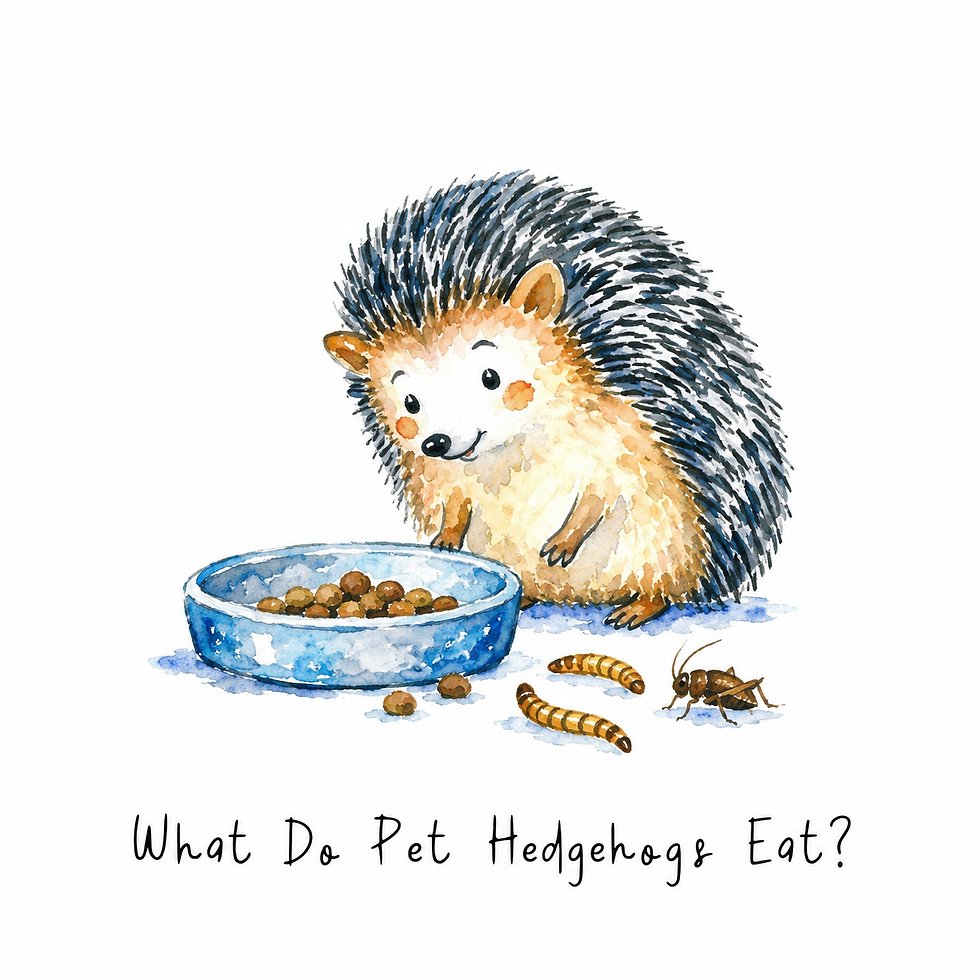
A good hedgehog diet starts with one honest fact: we still do not know everything about the exact nutritional requirements of African pygmy hedgehogs. That does not mean owners have to guess. Veterinary guidance and the research we do have point toward a balanced, portion-controlled, species-appropriate commercial diet as the foundation, with insects and other suitable foods providing variety.
This guide explains what pet hedgehogs can eat, what should make up most of the diet, where cat food fits into the conversation, and which popular feeding rules are more confident than the evidence allows.
What do pet African Pygmy Hedgehogs eat?
African pygmy hedgehogs are often described as insectivores, but their natural feeding behavior is broader than that label suggests. They are opportunistic omnivores. In the wild, related African hedgehogs consume a varied mix of invertebrates along with small amounts of vertebrate prey and plant material.
That natural variety matters, but it does not mean a captive hedgehog should live on mealworms, fruit, meat scraps, or a homemade mixture. A wild diet is difficult to reproduce accurately, and feeding individual ingredients does not guarantee the right balance of amino acids, fat, vitamins, calcium, phosphorus, and other nutrients.
The best foundation for a pet hedgehog diet
Our practical recommendation is to begin with a reputable commercial food formulated specifically for hedgehogs or insectivores, then evaluate the actual product rather than trusting the picture on the bag. Hedgehog foods vary widely. Look for clear ingredient information, a guaranteed analysis, feeding directions, current contact information for the manufacturer, and evidence that the company understands hedgehog nutrition.
The Hedgehog Place currently recommends Hedgehog Precision as a species-specific, insect-based option. We are not sponsored by or affiliated with the company. Product formulas can change, so check the current label and discuss the food with an experienced exotic-animal veterinarian if your hedgehog has kidney disease, obesity, dental disease, allergies, or another medical condition.

Why cat food advice is changing
Cat food has been used as a hedgehog staple for many years because it is readily available, nutritionally complete for cats, and often more consistent than older hedgehog foods. It still appears as an acceptable alternative in veterinary care guides. However, cat food is formulated for cats, not hedgehogs, and newer evidence gives owners a reason to be more cautious about treating it as the automatic first choice.
A 2026 observational study compared 19 client-owned African pygmy hedgehogs. Ten had been fed a commercial kitten diet and nine had been fed a species-specific hedgehog diet. The kitten-food group had higher blood urea nitrogen, creatinine, and phosphorus concentrations. Those are biochemical measurements associated with kidney function.
The study does not prove that kitten food caused kidney disease. It was small, evaluated only two diets, relied partly on owner-reported feeding histories, and did not randomly assign foods or follow the hedgehogs over time. The results may also have been affected by health differences between the animals. Still, the findings support choosing a well-formulated species-specific diet when one is available and avoiding high-calorie kitten food as a routine adult diet unless an exotic veterinarian recommends it for a particular hedgehog.
If your hedgehog currently eats cat food and is doing well, do not make a sudden change. Bring the exact food label and your hedgehog's weight history to an exotic veterinarian and transition gradually if a change is recommended.
Protein fat and fiber without the magic numbers
You will often see one narrow set of protein and fat percentages repeated online as the rule for every hedgehog. The evidence is not that precise. A veterinary nutrition review published in 2009 noted that specific hedgehog nutrient requirements were still poorly defined. It described balanced captive diets containing moderate protein and fat, but the ranges were calculated on a dry-matter basis. The guaranteed analysis printed on a package is usually presented on an as-fed basis, so the numbers are not directly interchangeable.
Ingredient quality, digestibility, calorie density, fiber source, mineral balance, life stage, activity, and the amount actually eaten all matter. A food does not become appropriate simply because two numbers on the label fall inside a popular internet range.
How much to feed
Hedgehogs are prone to obesity, and free-feeding makes it difficult to notice changes in appetite. Give 3 to 4 teaspoons, or approximately 15 to 20 milliliters, of the primary diet per day as a typical amount, adjusted for the animal's weight and activity. That is a reference point, not a universal prescription. Kibble size and calorie density vary, and growing, pregnant, nursing, underweight, elderly, and medically fragile hedgehogs may have different needs.
A more useful routine is to measure the food consistently and track the individual hedgehog:
Weigh your hedgehog regularly. Use a digital gram scale and keep a simple record so gradual gain or loss does not go unnoticed.
Measure the evening portion. A measured portion makes appetite changes easier to recognize than repeatedly topping up a full bowl.
Check body condition as well as weight. Two hedgehogs can weigh the same and carry very different amounts of fat or muscle.
Adjust slowly. Rapid calorie restriction is unsafe. Weight loss should be gradual because hepatic lipidosis occurs in African pygmy hedgehogs.
Where insects fit
Insects are appropriate enrichment and provide dietary variety, but an insect-only diet is not balanced. Merck specifically warns that a diet made mostly of invertebrates can contribute to calcium deficiency.
Offer commercially raised feeder insects from a reputable source. Crickets, mealworms, earthworms, roaches, and other suitable feeders can be rotated, depending on availability and your veterinarian's advice. Gut-loaded insects can contribute more useful nutrition than insects maintained on a poor diet. Very fatty feeders, including waxworms, are better treated as occasional extras, especially for hedgehogs that gain weight easily.
Avoid wild-caught insects. Their pesticide exposure, parasites, and species identification are unknown. Remove uneaten live insects so they do not stress or injure your hedgehog.
Other foods and treats
A small amount of variety can be useful, but extras should not displace the balanced primary diet. Merck lists cooked unseasoned meat or egg, moist commercial pet food, selected vegetables, small amounts of fruit, and invertebrate prey among foods that may supplement the main diet.
Suitable occasional foods
Fully cooked, unseasoned egg
Small pieces of fully cooked, unseasoned lean meat
Small amounts of cooked carrot, squash, peas, beans, or leafy greens
Small pieces of apple, pear, banana, or berries
Commercially raised feeder insects
Introduce only one new food at a time and keep the portion small. This makes it easier to identify the cause if your hedgehog develops loose stool, refuses food, or reacts poorly.
Foods to avoid
Raw meat or raw egg. Merck advises against both because of Salmonella risk.
Milk. Adult hedgehogs may develop diarrhea after drinking milk.
Seasoned salty sugary or fried foods. These add calories and ingredients your hedgehog does not need.
Whole nuts seeds and other hard choking hazards. Hedgehogs can wedge hard food against the palate, and small hard pieces can be difficult to manage safely.
Any food with uncertain safety. Many online toxic-food lists are copied from dog, cat, or wildlife guidance. If a food has not been established as safe for pet hedgehogs, there is no benefit to experimenting with it.
Water and supplements
Fresh water should be available at all times. Use a clean setup your hedgehog can access reliably and monitor actual drinking behavior. You can read more in Your Hedgehog's Water.
A hedgehog eating a balanced commercial diet generally should not receive routine vitamin or mineral supplements unless an exotic veterinarian recommends them. More is not automatically better. Adding calcium, vitamins, oils, or powders without considering the full diet can create an imbalance rather than correct one.
How to change foods safely
Hedgehogs can be reluctant to accept unfamiliar food, and an abrupt change can upset digestion or reduce intake. Keep the familiar food available while gradually increasing the new food. Watch how much is actually eaten rather than assuming an empty or disturbed bowl means the food was consumed.
Do not try to force a hedgehog to accept a new diet by withholding all familiar food. A significant drop in appetite matters in such a small animal. If your hedgehog is eating much less, losing weight, producing fewer stools, acting lethargic, vomiting, developing diarrhea, or showing another change in behavior, contact an exotic-animal veterinarian promptly.
For additional warning signs and next steps, read Why Isn't My Hedgehog Eating. Changes in stool can also provide useful context; see Why Is My Hedgehog's Poop Green.
What a healthy feeding routine looks like
For most healthy adult African pygmy hedgehogs, a sensible routine includes a measured portion of an appropriate commercial staple, fresh water, modest food variety, and regular opportunities to forage and exercise. Hiding a few pieces of kibble or appropriate insects around the enclosure encourages natural searching behavior while slowing down fast eaters.
Diet and activity work together. Our guide to Hedgehog Exercise and Enrichment includes additional ideas for keeping a pet hedgehog active.
Keep a short weekly record of weight, food offered, food left over, stool changes, and unusual behavior. That record is far more useful than repeatedly changing foods based on one isolated weigh-in or one unusual night.
Frequently Asked Questions about Hedgehog Food
Can hedgehogs eat cat food?
Yes, some veterinary references still list an appropriate low-fat or weight-management cat food as an alternative when a suitable hedgehog or insectivore food is unavailable. However, cat food is formulated for cats. A small 2026 study found less favorable kidney-related blood measurements in hedgehogs eating one kitten diet than in hedgehogs eating one species-specific food. It did not establish that all cat foods cause kidney disease, but it supports choosing a reputable species-specific diet when possible and discussing long-term cat-food use with an exotic veterinarian.
Can hedgehogs eat mealworms every day?
Mealworms can be part of a varied diet, but they should not become the entire diet or crowd out balanced food. An invertebrate-heavy diet can be deficient in calcium, and mealworms also add calories. Portion and frequency should reflect your hedgehog's weight, activity, primary food, and the other insects being offered.
Can hedgehogs eat fruit?
Small pieces of certain fruits can be offered occasionally. Fruit is optional, not a nutritional requirement, and large portions add sugar and may upset the digestive system. Introduce one food at a time and stop if stool or appetite changes.
Can hedgehogs eat eggs?
A small amount of fully cooked, plain egg can be offered as an occasional food. Do not feed raw egg because of the risk of Salmonella, and avoid butter, oil, salt, cheese, or seasoning.
Should I add vitamins or calcium?
Not routinely. Merck states that vitamin or mineral supplementation is unnecessary when a hedgehog eats a balanced commercial diet. Supplement only when an exotic veterinarian has evaluated the complete diet and identified a reason.
How do I know whether the diet is working?
Watch the whole animal rather than one label number. Track body weight and condition, appetite, stool, activity, skin and quill quality, and any change in drinking or urination. Regular examinations with an exotic-animal veterinarian are important because hedgehogs can hide illness and diet-related problems may not be obvious at home.
The Bottom Line
Choose a transparent, well-formulated hedgehog or insectivore food as the primary diet when possible. Measure it, monitor weight, add appropriate insects and small amounts of other suitable foods for variety, keep fresh water available, and change diets gradually. Cat food can still serve as an alternative in some circumstances, but it should not be treated as automatically equivalent to a species-specific diet.
Most importantly, be cautious of absolute feeding rules that are not tied to a veterinary source or actual hedgehog research. African pygmy hedgehog nutrition is still developing, and responsible guidance should be willing to say what is known, what is preliminary, and what has not yet been established.
Veterinary Note: This article provides general educational information and is not a substitute for an examination or individualized feeding plan from a licensed veterinarian experienced with African pygmy hedgehogs.
Sources and veterinary references


Comments